On this page · 4 sections ▾
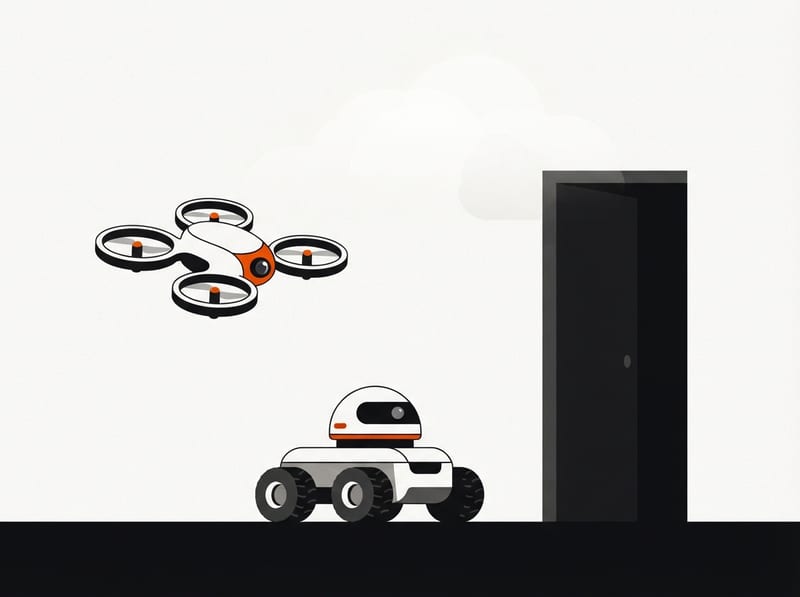
Amazon-owned Ring announced a new Ring Robotics line on November 10, 2026, with two products: the Ring Drone Cam, an indoor security drone, and the Ring Rover Cam, a patrol robot for businesses. The Rover Cam ships on December 16, 2026, and the Drone Cam follows on January 27, 2027. Both rely on a cloud-based navigation system called AI Pilot.
Key facts
- Ring Drone Cam: $249.99, ships January 27, 2027. Weighs 165 grams, with a 2K front camera and a 1080p camera underneath, per Engadget.
- Ring Rover Cam: $999.99, available for preorder and shipping from December 16, 2026, according to The Verge.
- Flight time: Engadget cites eight to 10 minutes for the drone, while Wired, ZDNET and TechRadar report five to eight minutes.
- Rover Cam specs: 4K periscope camera, about 30 minutes of patrol time, and coverage of up to 5,000 square feet on a single floor.
- Availability: TechRadar says the Drone Cam is US-only for now.
How the devices work
Ring founder Jamie Siminoff told reporters that earlier drone versions failed because adding sensors and computing raised weight and power needs. Wired reports that Ring moved the intelligence off the aircraft, so a cloud agent called AI Pilot now directs it. Siminoff told Engadget that a fully onboard design would likely have cost more than $5,000.
The drone flies scheduled patrols, responds to motion, door or leak sensors, and can be sent to a spot tapped on the Alexa Home Map. It lands if it loses Wi-Fi. TechRadar notes it has no ceiling sensor and cannot devise a new route around a group of people.
The Rover Cam is a rebuilt Amazon Astro. The Verge says the cupholder is gone, replaced by a tower with a siren and flashing red light, and that the tower also projects a blue ring onto the ceiling so staff can find the robot. It has no Alexa access and uses two-way talk instead.
Privacy and noise
Ring says video from both devices is protected by TAKE (Throw Away the Key Encryption). Wired reports that Ring briefly holds the key to run cloud AI features before deleting its copy, which makes the scheme less strict than true end-to-end encryption. TechCrunch says it is unclear whether local storage will be offered.
The drone is loud, and Siminoff says that is deliberate. TechRadar quotes him: "It's loud, we think that's a feature." Wired adds that a remote snoop could not operate it silently. ZDNET's reviewer suggested the noise makes it better suited to empty homes.
Critics have long tied Ring to police access to footage. Wired quotes Thorin Klosowski of the Electronic Frontier Foundation, who urged buyers to consider how the device affects others in the home.
What to watch
Astro for Business launched at $2,349.99 and was discontinued about a year later, The Verge reports. Wired notes buyers still face the risk that Amazon could end support if Ring Robotics falters.