On this page · 5 sections ▾
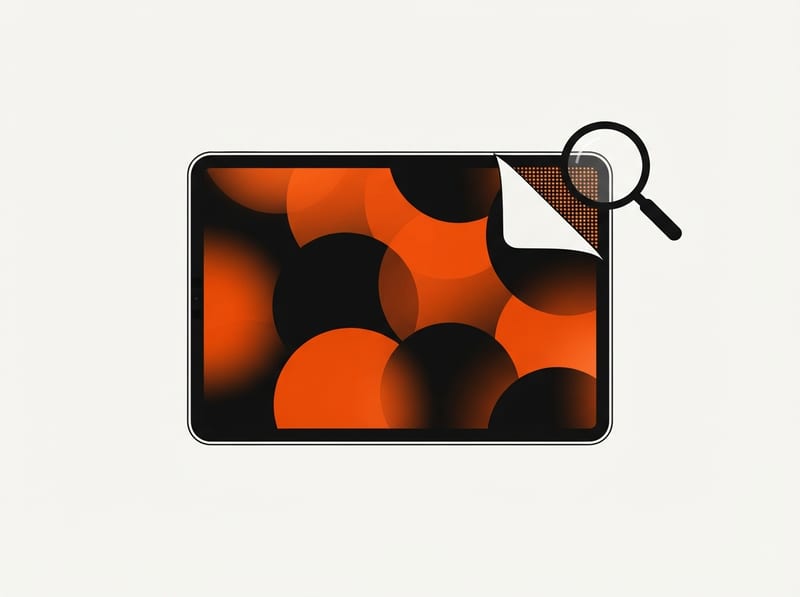
OLED is a display technology in which every pixel produces its own light, so a pixel can switch fully off to show black. An LCD, which the previous iPad mini used, shines a backlight through a layer of filters, so black is never quite black. Apple's new iPad mini moves to OLED, but with a simpler panel than the one in the iPad Pro.
As The Verge reported, the new mini pairs an 8.5-inch OLED display with a thinner, lighter body. The screen itself is the subject here.
How does OLED differ from LCD?
An LCD has two main parts: a light source behind the screen and a layer of liquid crystals that block or pass that light for each pixel. Because the backlight stays on, dark areas still glow a little.
An OLED panel has no backlight. Each pixel is made of organic material that lights up when electricity passes through it. A pixel showing black simply stays off. TechCrunch describes this as pixel-level lighting control, and it cites a 2 million:1 contrast ratio for the new iPad mini.
Macworld lists the other gains over the old Liquid Retina LCD: deeper blacks, higher contrast, faster pixel response and improved viewing angles. The Verge also notes a minimum brightness of 1 nit, which can make the screen easier on the eyes in a dark room.
Why is the iPad mini's OLED not the same as the Pro's?
Not all OLED panels are built alike. According to Macworld, the iPad mini uses a single-stack LTPS OLED panel. The iPad Pro uses a tandem OLED with LTPO technology.
In a tandem design, two emissive layers are stacked, which generally allows more brightness. LTPO is the kind of backplane that generally lets a screen vary its refresh rate. The mini's simpler build shows up in two numbers:
- Peak brightness: 1,200 nits on the mini, against 1,600 on the iPad Pro, per Macworld.
- Refresh rate: the mini tops out at 60Hz. The Pro has ProMotion, which goes up to 120Hz for smoother scrolling and animation.
The Verge notes that the mini's technical specs list up to 4K resolution at a 60Hz refresh rate, and MacRumors says Apple's specs do not mention ProMotion. Macworld says the single-panel approach keeps costs lower.