On this page · 5 sections ▾
A foldable phone cannot remove the crease in its screen, so makers try to hide it. The iPhone Duo, according to a teardown by iFixit, uses a matte nano-texture cover to scatter reflections and a special subpixel layout to make the fold line less visible. Both tricks work on how the eye perceives the display, not on the physical bend.
Why does a folding screen crease at all?
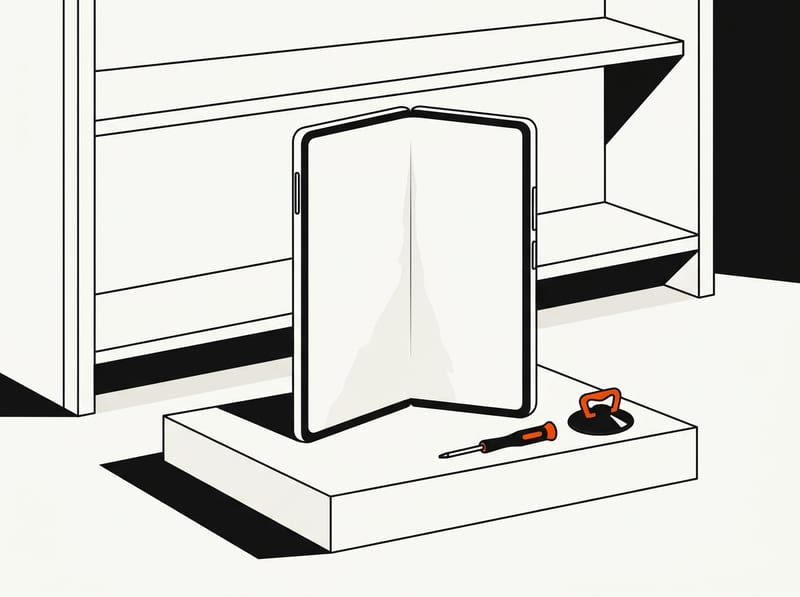
An OLED panel on a foldable has to bend thousands of times at the same spot. Over time the layers there settle into a slight curve, and the surface no longer sits perfectly flat. Light then bounces off that area at a different angle than it does elsewhere, which makes the line visible, especially under bright lights or in sunlight.
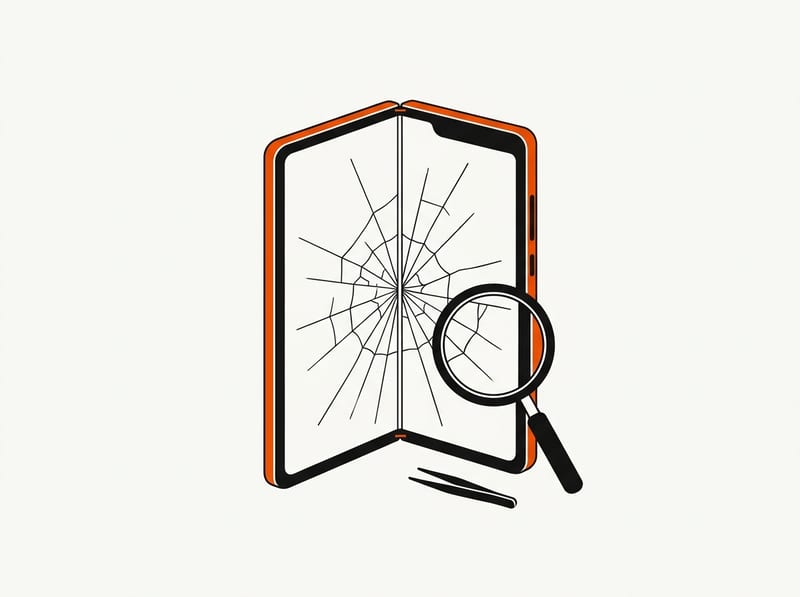
The hinge and its support structure also matter. As TechRadar reported, iFixit suggests stress from the crease pressing on the central support bar of the hinge could be linked to cracked screens some owners report, though it says further investigation is needed.
How does a matte texture hide it?
As The Verge reported, the Duo's inner screen has a matte nano-texture cover. It makes the display easier to read in bright sunlight, and it also masks the crease by scattering reflections.
The logic is simple. A glossy surface sends light back in a clean, directed beam, so any dip or ridge shows up as a visible streak. A rough surface at a microscopic scale breaks that beam into many directions. The crease still exists, but it no longer produces a sharp highlight.
What is the subpixel trick?
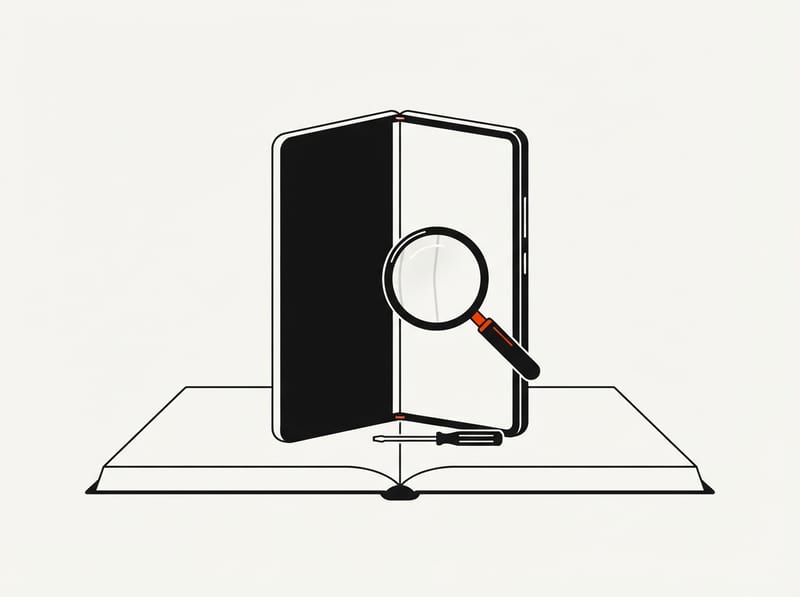
Under a microscope, iFixit found oval-shaped subpixels arranged at various angles. The site believes this layout is meant to reduce visual artifacts and further mask the crease down the middle of the display.
Subpixels are the tiny red, green and blue elements that make up each pixel. Regular grids can create repeating patterns that the eye picks out along an edge or line. Varying the shape and angle breaks up that regularity, so a fold line has less of a pattern to stand out against. This is iFixit's interpretation, not something Apple has confirmed in the sources.
What does it cost in repairability?
Hiding the crease and building a durable hinge add complexity. iFixit gave the Duo a 5 out of 10 repairability score, the best it has awarded a foldable. The nano-texture outer layer is relatively easy to replace without swapping the OLED beneath it. Replacing the display itself, however, is described as expensive and difficult, as with other foldables.