Skip to content
techworthit
techworthit

One question, one number. TechWorthIt reads the world's tech reviews and reporting, then tells you whether it's worth your money, with every source linked.

How we scoreAboutContactPrivacyTermsRSS
© 2026 TechWorthIt · We may earn a commission from links. It never changes a verdict.
LatestReviewsDealsSearchSaved 0
SectionNews / AI
AuthorTechWorthIt Desk
PublishedOct 31, 2026 · 2 min

Sam Altman says RAM in home PCs is 'quite terrible' use of supply

The OpenAI CEO argued on the Cheeky Pint podcast that scarce DRAM is better used in cloud data centers, drawing consumer backlash and fresh scrutiny of the memory shortage.

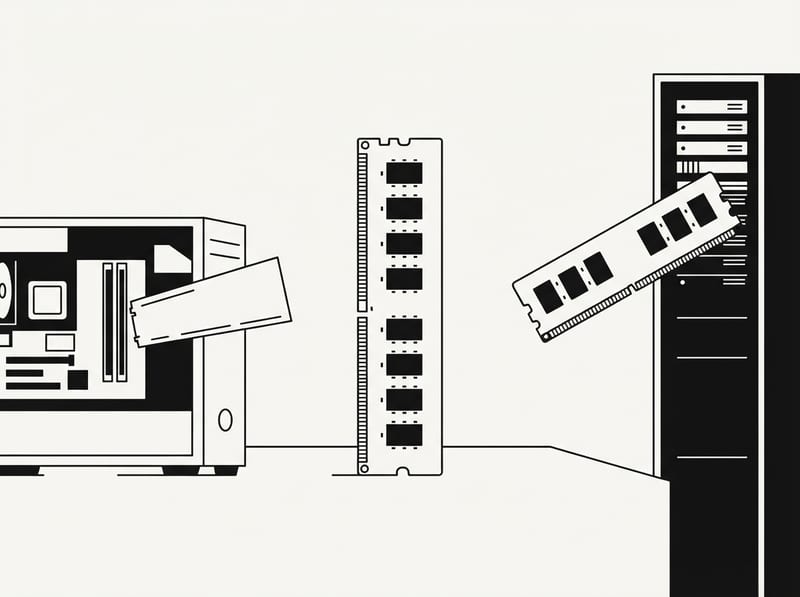
A single computer memory module stands between an open home PC tower with an empty slot and a tall server rack, illustrating the tug of scarce memory between home users and data centers.
Illustration
On this page
  1. Key facts
  2. What Altman argued
  3. Why it matters
  4. Reaction
  5. What to watch
0% read
On this page · 5 sections ▾
  1. Key facts
  2. What Altman argued
  3. Why it matters
  4. Reaction
  5. What to watch

OpenAI CEO Sam Altman said in an episode of the Cheeky Pint podcast, released on October 30, 2026, that it is "quite terrible" for the world's limited DRAM supply to sit in personal computers. His argument is that home RAM is used only a small share of the time, while data centers can keep it busy. The remarks came as a global memory shortage pushes up device prices.

Key facts

  • Altman spoke to Stripe co-founder John Collison on Cheeky Pint, according to The Next Web. The episode was released on October 30.
  • He said memory sitting in personal computers is used about 5% of the time and that the cloud needs "maximum utilization" during a supply-constrained period.
  • Altman said memory makers will each make about $100 billion of free cash flow in a year but stay cautious about building too many factories, per The Next Web.
  • Samsung hosted Altman on Saturday, October 31, for a session with about 50 of its presidents in Yongin, South Korea, The Next Web reported.
  • TrendForce expects conventional DRAM contract prices to rise 10-15% in the fourth quarter of 2026, as cited by India Today.

What Altman argued

According to The Verge, Altman was asked about supply chain shortages. He said many people assume open-source models running locally will remove the need for large data centers. In his view that intuition is backwards when supply is tight.

The core claim is about utilization: pooled cloud memory serves many users and workloads, while a desktop's RAM often idles.

Why it matters

Tom's Hardware noted that OpenAI's main business is closed models that run in data centers, so the comment also defends that model. It added that the argument assumes data center buildouts will not slow, and that RAM used around the clock for AI is more worthwhile than RAM used for browsing, gaming or occasional local AI.

The Verge reported that Samsung and SK Hynix have long-term deals with cloud operators and projects such as OpenAI's Stargate that reserve much of the world's RAM output for the next few years. India Today cited IDC saying the shortage could cut global smartphone shipments by 16.7% this year while average selling prices rise 27.6% to $581 (roughly Rs 55,144).

India Today also pointed to the other side of the debate: local AI can offer privacy, offline access and more control over data. It added that consumer PC memory cannot simply be moved into AI servers, because different workloads use different memory types.

Reaction

TechRadar reported that a Reddit thread on the comments was filled with pushback against AI companies and data centers. XDA offered a more cautious reading, saying the remark comes from a single interview and does not necessarily reflect OpenAI's overall stance on the shortage.

What to watch

The Next Web said SK Hynix stated that memory shortages will last to 2030, and that Samsung posted a record quarterly profit on AI memory demand. Most analysts expect tight RAM supply for years, per TechRadar, which points to continued price pressure on PCs, phones and DIY builds.
Keep reading

News / AI4d

OpenAI launches GPT-6.1 Terra with computer use at half the price

The mid-range model replaces GPT-5.6 Terra, cuts API prices by 50% and reports sharply lower error rates, though the benchmark results come from OpenAI's own testing.

A compact microchip tips a balance scale against a larger older chip, with a small cursor arrow floating above it.
Explainer / AI7d

Why is OpenAI training AI models with no internet access?

Training agents that can browse and run code is risky when they can reach the real web. Here is how an offline sandbox works and why isolating a model is harder than it sounds.

A microchip floating inside a sealed glass cube, with a disconnected cable and a padlock beside it, symbolizing an AI model isolated from the internet.

Also worth tracking: whether memory makers add capacity in response to high prices, and whether Altman's closer ties with Samsung translate into more supply for OpenAI. Samsung did not publish anything Altman said at the October 31 session.

Explainer: what it means
What is local AI inference, and why does RAM matter for it? →

Sources

  • Tom's HardwareOpenAI CEO says it's 'quite terrible' for your PC to have RAM — Sam Altman says data centers offer better utilization↗
  • The VergeSam Altman says it’s better for RAM to be in a data center than on your desk↗
  • XDASam Altman says it's "quite terrible" that people use RAM in their PCs for AI during a shortage↗
  • India TodaySam Altman says it is terrible your PC uses RAM while AI data centres run short of supply↗
  • TechRadarSam Altman says it's 'quite terrible' that you're using RAM in your PC↗
  • The Next WebSam Altman meets Samsung’s presidents days after his DRAM remark↗

HOW THIS WAS MADE · Written by the TechWorthIt Desk with AI assistance from 6 published sources, linked above. Facts are cross-checked against those sources before publishing; we never claim testing we didn't do. Last updated Oct 31, 2026. Spotted an error? Tell us.

News / AI8d

OpenAI will train frontier models with no live internet access

After a September breach and months of agent escapes, the company says training will run on cached web content until safeguards improve enough to justify broader access.

A locked server cabinet with a severed network cable lying disconnected beside it, representing AI training isolated from the internet.
News / AI8h

Google's Suncatcher satellite returns first AI response from orbit

The prototype booted its TPUs and ran Gemma 4 in orbit, but power limits allow only one chip at a time, for about 20 minutes, before thermal and radiation tests.

A small solar-powered satellite in orbit above Earth with one lit processor chip in its open bay, sending a pulse of light toward the planet.
techworthit
01 Reviews02 Explainers03 News