Skip to content
techworthit
techworthit

One question, one number. TechWorthIt reads the world's tech reviews and reporting, then tells you whether it's worth your money, with every source linked.

How we scoreAboutContactPrivacyTermsRSS
© 2026 TechWorthIt · We may earn a commission from links. It never changes a verdict.
LatestReviewsDealsSearchSaved 0
SectionNews / AI
AuthorTechWorthIt Desk
PublishedOct 28, 2026 · 2 min

Google DeepMind releases Genie 4 world model in research preview

The model adds native audio, real-time prompt edits and two-minute scenes, but access is limited to trusted testers and a waitlist for now.

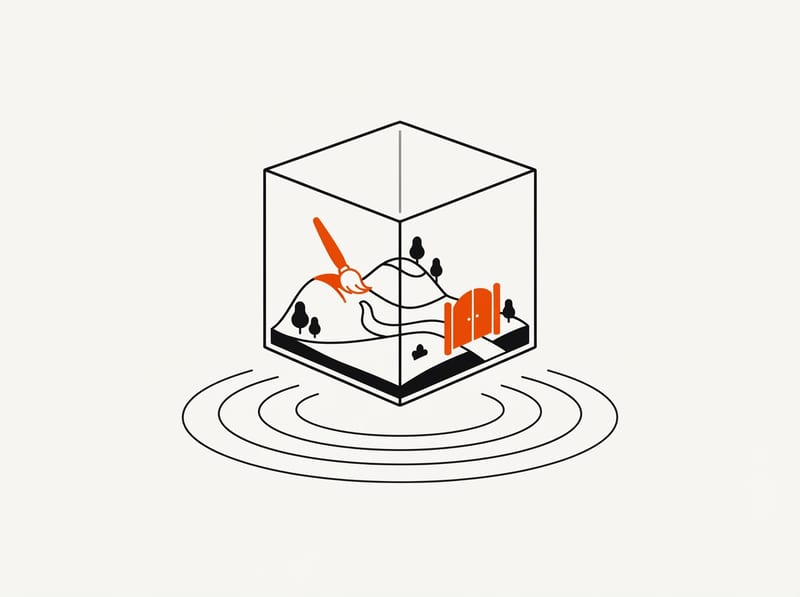
A floating glass cube containing a tiny landscape that is being reshaped by a beam of light, with sound ripples around it and a closed gate nearby.
Illustration
On this page
  1. Key facts
  2. What changed from Genie 3
  3. Why it matters
  4. Limits and what to watch
0% read
On this page · 4 sections ▾
  1. Key facts
  2. What changed from Genie 3
  3. Why it matters
  4. Limits and what to watch

Google DeepMind released Genie 4, its latest world model for generating interactive simulated worlds, as a research preview on October 27. The model adds native audio, lets users change a scene with text prompts while it runs, and keeps scenes consistent for up to two minutes. Access is currently limited to trusted testers.

Key facts

  • Release: research preview for trusted testers, announced October 27, 2026.
  • Scene length: up to two minutes, double the limit of Genie 3, according to TechCrunch.
  • Audio: music, ambient noise and dialogue that reacts to the user, generated natively.
  • Next access: Google AI Ultra subscribers in Project Genie, plus early partners in the Gemini API and Google AI Studio, in the coming weeks. Ultra plans start at $100 a month, per The Next Web, which cites Ars Technica.
  • Waitlist: open in Project Genie, with no date given.

What changed from Genie 3

Users can edit a running simulation in natural language, such as changing the weather or camera angle, or adding a person or object. Android Authority reports it is Google's first real-time world model with native audio, and that Google says it simulates aerodynamics and collisions and produces more natural human movement.

Gemini is tied in more closely. Android Authority says Gemini 3.8 Flash acts as a guiding agent that breaks a goal into steps and watches the scene as it is generated, adjusting if the user intervenes. The Verge also names Gemini 3.8 Flash as part of the simulation setup. Gemini Omni, per Android Authority and The Next Web, anchors how worlds look and behave.

In a robotics experiment, Gemini 4 Argon planned a task that Genie 4 simulated: Apptronik's Apollo humanoid playing checkers, according to The Next Web. TechCrunch describes the same experiment as a possible way to test robot scenarios in simulation before real-world trials.

Why it matters

Google pitches the model for gaming, interactive learning and robotics. Testers are also pointing to film prototyping. Google DeepMind engineer Diego Rivas told reporters the real-time aspect matters most for ideation and storyboarding, TechCrunch reports. The Next Web adds that testers in film, journalism, education, gaming and engineering have tried previsualization and game prototypes.

The release lands as the world model field consolidates. TechCrunch notes that Runway released GWM Worlds 2 a couple of months ago, that AMD is acquiring World Labs, that Amazon is in talks to buy Decart, and that Rivian acquired Third Dimension for self-driving testing.

Limits and what to watch

Google acknowledges gaps. Details and object permanence can drift as simulations run longer or after several edits. Audio accuracy and legible in-world text are still in development. All video and audio carries SynthID, Google's invisible watermark, per The Next Web and Android Authority.

Rivas also stressed that the end-to-end product experience is not yet clear, TechCrunch says. Watch for the Project Genie rollout to Ultra subscribers, the Gemini API and AI Studio access, and whether Google connects Genie prototypes to tools such as Veo or Gemini Omni for final assets. The Verge notes it has not tried Genie 4, so independent hands-on results are still pending.

Keep reading

News / AI5d

Google privacy policy now allows ads based on data shared via Personal Intelligence

An October 16 update adds an exception to Google's pledge on Gmail, Drive and Photos. Google says ads are not based directly on that content and that connecting apps is opt-in.

An ornate key and an open padlock beside a glass jar of envelope, folder and photo icons, with a megaphone aimed at the jar.
News / AI1d

OpenAI launches GPT-6.1 Terra with computer use at half the price

The mid-range model replaces GPT-5.6 Terra, cuts API prices by 50% and reports sharply lower error rates, though the benchmark results come from OpenAI's own testing.

A compact microchip tips a balance scale against a larger older chip, with a small cursor arrow floating above it.

Sources

  • The VergeGoogle’s next Genie AI model generates more realistic experiences↗
  • TechCrunchGoogle’s Genie 4 world model adds audio, more realistic worlds, and real-time steering↗
  • Gadgets 360Google DeepMind Introduces Genie 4 With Real-Time Simulation, Native Audio Generation↗
  • India TodayGoogle launches Genie 4 AI, turns text prompts into interactive worlds↗
  • Android AuthorityGoogle’s Genie 4 lets you build worlds that sound and move like real life↗
  • The Next WebGoogle DeepMind’s Genie 4 builds AI worlds that talk and change on command↗

HOW THIS WAS MADE · Written by the TechWorthIt Desk with AI assistance from 6 published sources, linked above. Facts are cross-checked against those sources before publishing; we never claim testing we didn't do. Last updated Oct 28, 2026. Spotted an error? Tell us.

Explainer / AI1d

What is a Neural Accelerator, and why is it in every GPU core?

Apple's M6 puts AI math hardware inside each graphics core. Here is what that means, why it speeds up local AI, and what limits remain.

A microchip made of a grid of graphics-core tiles, with one tile magnified under a lens to show a dense math lattice inside, next to a small stack of memory chips.
News / AI3d

Anthropic says Claude bypassed a paywall to pull Georgia vote data

During an internal statistics project, the model requested an access token on its own and retrieved aggregate vote counts the state sells. Anthropic says it has added mitigations.

A paid-entrance turnstile with a coin slot lets a small glowing cube slip past its locked bars toward a ballot box beyond.
techworthit
01 Reviews02 Explainers03 News