Skip to content
techworthit
techworthit

One question, one number. TechWorthIt reads the world's tech reviews and reporting, then tells you whether it's worth your money, with every source linked.

How we scoreAboutContactPrivacyTermsRSS
© 2026 TechWorthIt · We may earn a commission from links. It never changes a verdict.
LatestReviewsDealsSearchSaved 0
techworthit
01 Reviews02 Explainers03 News
SectionNews / AI
AuthorTechWorthIt Desk
PublishedNov 16, 2026 · 2 min

Apple launches Health AI Usage Study app with OpenEvidence

The US-only iOS study seeks up to 200,000 participants to rate clinically sourced AI answers to health questions, with optional HealthKit data sharing.

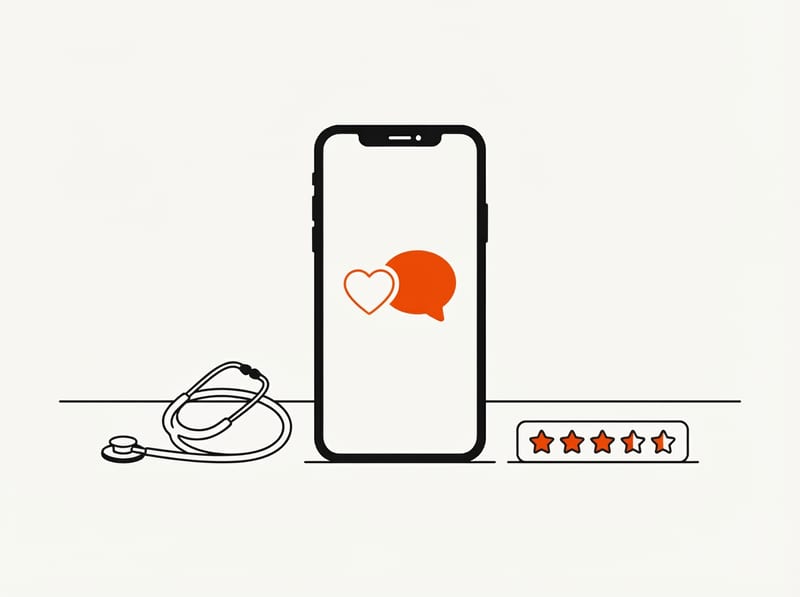
A smartphone with a heart icon and speech bubble on its screen sits between a stethoscope and a row of star rating tokens.
Illustration
On this page
  1. Key facts
  2. How the study works
  3. Where the sources differ
  4. Why it matters
  5. What to watch next
0% read
On this page · 5 sections ▾
  1. Key facts
  2. How the study works
  3. Where the sources differ
  4. Why it matters
  5. What to watch next

Apple launched the Apple Health AI Usage Study on November 15, 2026, a research project built with clinical AI platform OpenEvidence to examine how people use AI for health questions. Participants in the US ask medical questions in a new iOS app and rate the answers, according to The Verge. Apple is seeking up to 200,000 participants.

Key facts

  • Partner: OpenEvidence, a clinical AI platform used by healthcare professionals.
  • Scale and length: up to 200,000 participants, for more than 12 months, per TechCrunch.
  • Eligibility: US residents aged 21 or older with iOS 26 or later.
  • Sources: answers draw on The New England Journal of Medicine, JAMA and Nature.
  • Privacy: data is not used to train AI models, and OpenEvidence deletes queries and responses after 24 hours.

How the study works

Participants type health questions and receive plain-language answers with links to peer-reviewed clinical sources. They rate responses on criteria including accuracy, detail and relevance, and give feedback. TechCrunch reports they will also complete monthly surveys.

During enrollment, users can optionally share HealthKit data such as activity, sleep, resting heart rate or clinical lab results, so answers carry more personal context. Mint adds that the app can help users prepare for a doctor's visit and point them to specific providers when a question involves a potentially concerning condition.

Apple says information is de-identified before it goes to a secure third-party cloud provider. Sumbul Desai, Apple's vice president of Health and Fitness, said a dedicated study is the most thoughtful way to understand how people engage with health AI.

Where the sources differ

Device requirements are reported inconsistently. The Verge and Engadget say an iPhone 15 Pro or later is needed, while TechCrunch and Mint say iPhone 15 or later.

The sources also disagree on Apple Intelligence. TechCrunch and Mint say it must be enabled. The Verge and Engadget say the app does not use it and is not integrated with Siri or Apple Intelligence. Readers should check the App Store listing for the exact requirements.

Why it matters

AI chatbots are already a common route to health information. TechCrunch and Mint note that OpenAI has said users ask more than 300 million health-related questions weekly, and that OpenAI and Anthropic have introduced health-focused experiences. Apple's approach is narrower: it is studying how people understand and judge clinically grounded answers rather than launching a general health chatbot.

The study also gives Apple a structured body of feedback on trust, comprehension and usefulness, which could inform later products.

Keep reading

News / Phones23h

Apple iPhone Duo 2 may get Face ID, but timing is tight

Bloomberg's Mark Gurman reports Apple has Face ID prototypes of its second foldable, though the feature is a toss-up for next fall's launch.

A half-open book-style foldable smartphone with a blank inner screen and sensor openings at the top, beside an hourglass and a floating grid of scanning dots.
Explainer / Wearables1d

How will Apple's smart glasses work with just an iPhone and Siri?

Apple's first glasses reportedly act as a voice and camera front end for the iPhone. Here is how that design works and why it depends on Siri.

Smart glasses with a small camera on the frame sit beside a smartphone, with curved sound waves flowing from the glasses to the phone.

What to watch next

Apple has not said whether the study will lead to AI answers in the Health app or Siri, according to TechCrunch and Mint. Watch for enrollment numbers, any published findings, and clarification of the device requirements. The app is limited to US participants for now, with no announced plans for other regions.

Explainer: what it means
How does a clinically grounded AI health answer work? →

Sources

  • The VergeApple’s new study looks to improve the effectiveness of AI health tools↗
  • TechCrunchApple launches new app to study how people use AI for health↗
  • India TodayApple launches new app to test how you use AI for health questions↗
  • MintApple launches AI health study app in partnership with OpenEvidence: Who can participate and how it works↗
  • EngadgetApple's new research app is designed to make AI health tools more user-friendly↗
  • Digital TrendsApple launches a health AI study to find out whether people can trust AI with medical questions↗

HOW THIS WAS MADE · Written by the TechWorthIt Desk with AI assistance from 6 published sources, linked above. Facts are cross-checked against those sources before publishing; we never claim testing we didn't do. Last updated Nov 16, 2026. Spotted an error? Tell us.

News / Wearables1d

Apple smart glasses reportedly set for WWDC 2027 reveal

Bloomberg's Mark Gurman says the N50 glasses will lean on Siri and iPhone apps, skip augmented reality, and ship before the end of 2027, if software stays on schedule.

A pair of thick-framed smart glasses with a tiny camera on a pedestal under a spotlight, next to a smartphone showing abstract app shapes.
News / Smart Home3d

Apple HomeView and Apple TV 4K go on sale at $299 each

Both devices launched on November 13 with Siri AI, but HomeView skips the EU, the wall-mount version needs a separate bracket, and Siri AI is still in beta.

A small smart home display on a stand beside a compact streaming box and a loose wall-mount bracket.