Skip to content
techworthit
techworthit

One question, one number. TechWorthIt reads the world's tech reviews and reporting, then tells you whether it's worth your money, with every source linked.

How we scoreAboutContactPrivacyTermsRSS
© 2026 TechWorthIt · We may earn a commission from links. It never changes a verdict.
LatestReviewsDealsSearchSaved 0
SectionExplainers / AI
AuthorTechWorthIt Desk
PublishedNov 3, 2026 · 3 min

What is Guided Learning, and how is it different from AI chat?

Guided Learning is Google's attempt to make AI act like a tutor instead of an answer machine. Here is how that approach works and where its limits are.

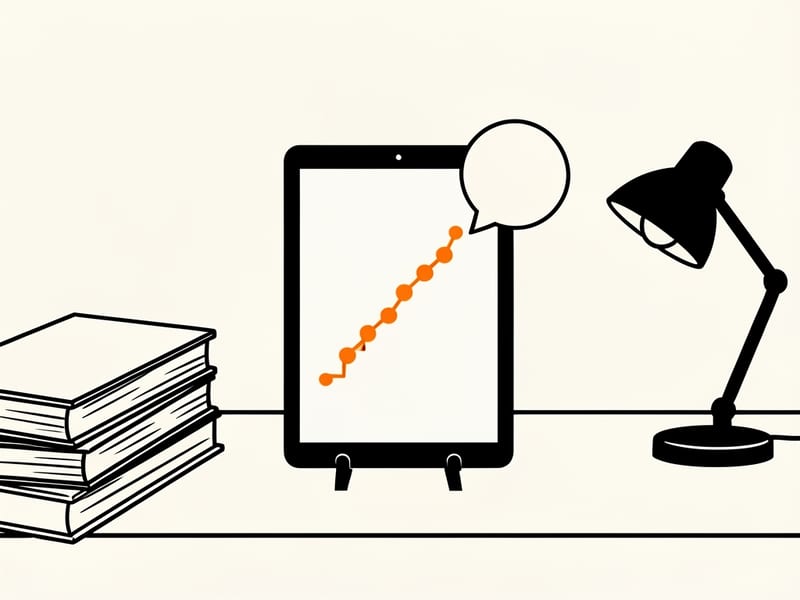
A tablet on a desk shows a staircase of connected dots on its screen, flanked by a stack of books and a lamp, illustrating step-by-step AI tutoring.
Illustration
On this page
  1. Why is Google talking about it now?
  2. How does Guided Learning work?
  3. What can teachers see?
  4. What are its limits?
  5. What does it mean for schools and families?
0% read
On this page · 5 sections ▾
  1. Why is Google talking about it now?
  2. How does Guided Learning work?
  3. What can teachers see?
  4. What are its limits?
  5. What does it mean for schools and families?
TL;DR
Guided Learning is a mode in which an AI model responds to a homework question with steps, prompts and quizzes instead of a finished answer. It is meant to address worries that chatbots let students skip the thinking, though it depends on the same error-prone models as standard AI tools.

Guided Learning is a mode of Google's AI that responds to a student's question with step-by-step explanations, prompts and quizzes rather than a direct answer. The aim is to make the AI behave more like a one-on-one tutor than an answer machine. Google is expanding it as schools weigh whether to allow AI in classrooms at all.

Why is Google talking about it now?

Google said on Tuesday that Gemini, Gemini Notebook, Gemini in Classroom and Google Search will be off for K-12 student accounts until administrators turn them on, according to The Next Web. The company announced Guided Learning's wider rollout alongside that change. It is now available worldwide in Google Classroom, and Google will test it in Search at some US schools this month.

The timing reflects pressure. Engadget reported that New York City placed a one-year moratorium on student use of generative AI tools through eighth grade, and that Los Angeles enacted a similar ban. Guided Learning is Google's answer to a specific complaint: that chatbots hand over answers and undermine learning.

How does Guided Learning work?

A standard AI chatbot is built to respond to a question as directly as it can. Guided Learning changes the response style. Instead of finishing the task, it breaks a problem into steps, asks the student questions and adds interactive features like quizzes. Google compares it to one-on-one tutoring, per Engadget.

In Search, the idea is the same. Google's education vice president, Chris Phillips, wrote that when its systems understand a student wants certain types of homework help, Search will walk them through the topic step by step. If a student pastes in a complex physics problem or asks for help with a book report, they will see prompts that encourage critical thinking rather than the answer itself.

This is a design choice about behavior, not a different kind of intelligence. The underlying system is still a generative AI model, now steered to guide rather than tell. Guided Learning was already available in the Gemini app before the Classroom launch.

What can teachers see?

In the school version, teachers can read transcripts of chatbot interactions on student accounts, Engadget reported. The Next Web notes that Classroom is where teachers assign the work and can read their students' chats. That visibility gives teachers a way to check how a student used the tool, which a general-purpose chatbot does not offer.

What are its limits?

The approach has an obvious weakness. Ars Technica points out that Google says all its generative AI products can make mistakes, so it may not be hard to talk the chatbot into doing the homework. A tutor-style mode is a default behavior, not a lock.


Keep reading

Explainer / AI5d

How do AI labs measure cybersecurity skill in a model?

Gemini 4 Carbon arrives with benchmark scores for finding, exploiting and patching bugs. Here is what those tests measure and what they leave out.

A sturdy padlock with a hairline crack in its body is gripped by a blank measuring caliper, symbolising the testing of a system's security.
News / AI5d

Google announces Gemini 4 Carbon, led by cyber defense gains

Two weeks after Argon, Google's new frontier model tops the Artificial Analysis index at 59 but is limited to select cyber defenders at first.

A thick round vault door standing slightly open with light spilling out, next to a small shield and a microchip, symbolizing a powerful AI model with restricted access for cyber defense.

There is also a structural issue. Schools that enable AI will get two versions: the standard Gemini-based AI and the Guided Learning version. Schools that want no AI at all cannot simply disable the AI in Search. Phillips told the New York Times that "Search and AI are deeply integrated," and that students at such schools would not have access to Search. Google told Engadget that administrators can enable each product individually, so the choice is not all-or-nothing across every tool, but AI in Search cannot be separated from Search itself.

That has drawn criticism. The Verge reported that Sen. Bernie Sanders called the arrangement "extortion," and that NYC Mayor Zohran Mamdani said no corporation should have the power to dictate how children are taught. Separately, The Next Web noted that in July Common Sense Media called Google's AI Search an "unacceptable risk" to students.

What does it mean for schools and families?

Guided Learning shows a real design idea: an AI can be tuned to support the process of learning rather than replace it. Whether it succeeds depends on how well it holds up when students push for shortcuts, and on how much oversight teachers actually exercise through transcripts.

For administrators, the decision is less about the tutoring mode than about the bundle around it. Accepting AI in Search is the price of keeping Search, and alternatives such as DuckDuckGo, which Ars Technica notes lets users disable AI features, exist for schools that object.

The news behind this
Google turns off AI and Search for K-12 accounts by default →

Sources

  • TechCrunchGoogle will let schools disable its AI tools, but not without sacrificing Search↗
  • The Next WebGoogle will switch off Gemini for school students unless schools opt in↗
  • The VergeGoogle is entirely disabling Search in schools that don’t want AI↗
  • EngadgetGoogle says students in schools that ban AI won't have access to Search↗
  • Ars TechnicaGoogle will let schools skip AI tools, but they have to give up search, too↗

HOW THIS WAS MADE · Written by the TechWorthIt Desk with AI assistance from 5 published sources, linked above. Facts are cross-checked against those sources before publishing; we never claim testing we didn't do. Last updated Nov 3, 2026. Spotted an error? Tell us.

News / AI6d

Google DeepMind releases Genie 4 world model in research preview

The model adds native audio, real-time prompt edits and two-minute scenes, but access is limited to trusted testers and a waitlist for now.

A floating glass cube containing a tiny landscape that is being reshaped by a beam of light, with sound ripples around it and a closed gate nearby.
News / AI2d

Anthropic's Claude now refuses to recreate specific existing games

An Anthropic engineer confirmed a rule steering Claude away from cloning particular games, while developers say it also blocks legitimate commissioned and reverse-engineering work.

A game controller behind a lowered gate-like barrier with a single loose building block in front, symbolising a block on cloning games.
techworthit
01 Reviews02 Explainers03 News