Skip to content
techworthit
techworthit

One question, one number. TechWorthIt reads the world's tech reviews and reporting, then tells you whether it's worth your money, with every source linked.

How we scoreAboutContactPrivacyTermsRSS
© 2026 TechWorthIt · We may earn a commission from links. It never changes a verdict.
LatestReviewsDealsSearchSaved 0
SectionExplainers / Enterprise
AuthorTechWorthIt Desk
PublishedNov 2, 2026 · 3 min

How can hackers remotely ruin a supermarket's freezers?

Supermarket refrigeration is networked for remote monitoring. Here is how that connection turns a maintenance feature into a way to spoil food, and why fixes are slow.

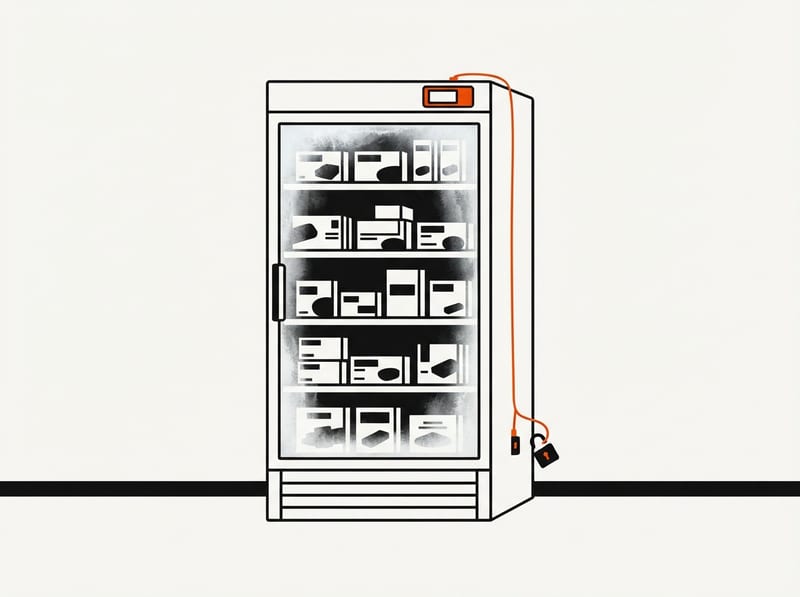
A frosted supermarket freezer case with a cable from its control module leading to an open padlock.
Illustration
On this page
  1. What is a refrigeration controller?
  2. How does the attack work?
  3. Why is it so hard to fix?
  4. Why does it matter now?
  5. What does it mean for you?
0% read
On this page · 5 sections ▾
  1. What is a refrigeration controller?
  2. How does the attack work?
  3. Why is it so hard to fix?
  4. Why does it matter now?
  5. What does it mean for you?
TL;DR
Many commercial freezers are run by internet-connected controllers that let technicians monitor and adjust them remotely, and an attacker who reaches those controllers can trigger defrost mode and spoil stock. Fixing this is hard because some older units cannot be patched and may need physical changes.

Commercial fridges and freezers are often run by networked controllers, small computers that set temperatures and defrost cycles and can be reached remotely for maintenance and alerts. If an attacker gets into one of those controllers, the same remote access lets them command the cooling equipment directly. In the latest wave across Europe, the apparent result was freezers pushed to around 50°C (122°F).

What is a refrigeration controller?

A supermarket does not rely on a simple thermostat in each cabinet. Refrigeration units are managed by control systems that regulate temperature, schedule defrost cycles and raise alarms when something fails. As The Verge noted, many modern units are connected to the internet to support remote maintenance and failure alerts.

That connection is useful. A technician can diagnose a fault without driving to the store, and a manager can be woken by a phone alert at 3 a.m., as one Delhaize manager described to Belgian broadcaster RTBF, according to Digital Trends. The cost is that a device built for cooling is now also a networked computer that can be attacked.

How does the attack work?

According to Tom's Hardware, the hackers remotely activated the built-in defrost mode and overrode both the temperature and the time spent defrosting. Defrost is a normal function: it warms the evaporator coils briefly to clear ice. Sabcobel, a Belgian refrigeration company, said the units' evaporators had been switched into defrost mode, as The Next Web reported.

The attacker does not need to break any hardware. A normal feature is simply run with unsafe settings and no end time. Frozen and chilled food warms quickly, and one Belgian store manager told RTL Info the result was "catastrophic" and that the whole fresh and frozen range had to be thrown out, per The Register.

Why is it so hard to fix?

The first problem is age. After the attack on French supermarkets last month, Danfoss, a Danish maker of refrigeration software, said the hacked units were older machines it could no longer patch against the threat, according to Digital Trends. The Register adds that some affected stores ran outdated firmware on Danfoss controllers, and that CERT-FR published an alert about compromised Danfoss AK-SM and AK-SC controllers.

The second problem is that software fixes are not always enough. Sabcobel's CEO said that physical modifications to its units are required, and that many will need them to be restored, per Tom's Hardware and The Next Web. As an interim step, he said, putting units on a secure internet connection is the simplest measure, one most customers took after the French attack.

It is also not yet clear that the same flaw was used each time. The Register notes it remains unclear whether the latest attacks used the same methods as in France, and The Next Web reports no evidence linking the incidents in Sweden, Belgium, France and the US. Nobody has claimed responsibility.
Keep reading

Explainer / AI4d

How do AI labs measure cybersecurity skill in a model?

Gemini 4 Carbon arrives with benchmark scores for finding, exploiting and patching bugs. Here is what those tests measure and what they leave out.

A sturdy padlock with a hairline crack in its body is gripped by a blank measuring caliper, symbolising the testing of a system's security.
News / Enterprise4d

DHS leak exposes records on 41,000 staff, hackers cite Okta

The 'Icepick' archive lists staff at ICE, CBP and CISA along with the internal tools they can access. Okta and DHS have both responded, and verification is still partial.

A heavy steel vault door stands slightly open with blank cards spilling out and a large key lying on the floor nearby.

Why does it matter now?

The incidents are spreading. Reports cover Belgium, Luxembourg, Sweden, Ireland, Estonia and Finland, with around 40 Delhaize stores in Belgium and 13 SuperValu stores in Ireland among those named. Several outlets also point to a string of freezer failures at US military base stores that the Pentagon is investigating.

The concern is less about any single store than about a pattern. Everyday infrastructure such as cold storage depends on connected devices that were rarely designed with attackers in mind. EU Food Commissioner Christophe Hansen said, "the weaponisation of food has become a reality," as Digital Trends reported.

What does it mean for you?

Shoppers face little direct risk, since stores are discarding spoiled stock. The more likely effect is thinner shelves, as Delhaize said its fresh and frozen range was temporarily somewhat limited while distribution centers kept operating normally.

For businesses that run connected equipment, the lesson is practical. Remote access should sit behind a secure connection, and firmware should be kept current. Equipment that can no longer be patched should be treated as a risk. Experts cited by Digital Trends believe stronger cybersecurity and regular software updates could have prevented the damage.

The news behind this
Supermarket freezers hacked across Europe in second wave →

Sources

  • The VergeMore European supermarkets are getting their freezers hacked↗
  • Digital TrendsHackers remotely turned supermarket freezers into ovens across Europe, ruining millions of euros worth of food↗
  • Tom's HardwareSupermarket freezers across Europe struck in second crippling cyberattack — hackers raise temperatures to 50 degrees Celsius in Belgium and Sweden, destroying food stocks↗
  • The Next WebSupermarket freezers in Sweden, Belgium, and Ireland hit by suspected hack↗
  • The RegisterFrozen part II: Hackers remotely defrost produce in Euro supermarkets ... again↗

HOW THIS WAS MADE · Written by the TechWorthIt Desk with AI assistance from 5 published sources, linked above. Facts are cross-checked against those sources before publishing; we never claim testing we didn't do. Last updated Nov 2, 2026. Spotted an error? Tell us.

News / AI4d

Google announces Gemini 4 Carbon, led by cyber defense gains

Two weeks after Argon, Google's new frontier model tops the Artificial Analysis index at 59 but is limited to select cyber defenders at first.

A thick round vault door standing slightly open with light spilling out, next to a small shield and a microchip, symbolizing a powerful AI model with restricted access for cyber defense.
News / Gaming9d

Capcom confirms breach of 11.7 million Capcom ID accounts

Attackers obtained email addresses and login metadata and reset 196 passwords. Capcom says no credit card data was exposed and its services remain available.

A game controller with an opened padlock beside it, symbolizing a security breach of gaming accounts.
techworthit
01 Reviews02 Explainers03 News