On this page · 5 sections ▾
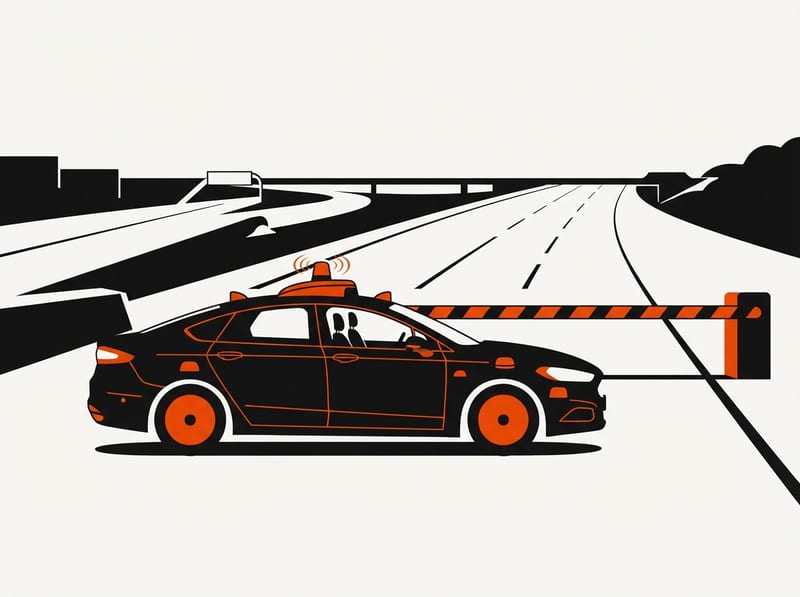
California's Department of Motor Vehicles barred Waymo's driverless robotaxis from state freeways on November 11, 2026, calling the operations an "imminent hazard to public safety." The order became public on November 17, and Waymo has since paused freeway driving in all of its US markets, according to reports from TechCrunch and The Verge.
Key facts
- The DMV restriction took effect on November 11 and was not made public until November 17.
- The DMV cited three Waymo vehicles entering an active construction closure on US-101 near Burlingame, and a separate encounter with California Highway Patrol vehicles on Highway 280 in San Francisco.
- Waymo has restricted freeway driving across its 15 US markets. Surface-street service continues, with what the company describes as over half a million trips each week.
- The ban stays in place until Waymo shows it has taken "effective corrective actions" to address the deficiencies.
- Wired reports it is unclear how long that process will take.
What the DMV said
In an emailed statement to TechCrunch, the DMV said the hazard stemmed from recurring incursions into active construction zones where workers, vehicles and equipment are present. It added that this happened despite a prior restriction and corrective actions after similar incidents on May 18, 2026.
The Highway Patrol incident was captured in a viral video. Wired describes a Waymo interfering with CHP cars enforcing a traffic break while workers cleared crash debris. Electrek notes that one media citation says the clip may have been sped up by the original poster.
Waymo says the US-101 encounters involved no injuries or collisions. Its statement to TechCrunch said it has temporarily restricted freeway operations elsewhere to evaluate its performance. Wired reports the company will keep testing on highways with safety operators behind the wheel.
A repeat problem
This is not the first freeway pause. Waymo began carrying public passengers on California freeways in November 2025 and voluntarily stopped highway operations in May 2026. Engadget reports a recall of 3,800 vehicles in June, and service returned in July after a software update. Wired adds that federal regulators at the National Highway Traffic Safety Administration had found the system failed to recognize highway construction zones, citing incidents in April and May that caused no collisions or injuries.
Wired also reports that NHTSA said last week it was examining whether a separate recall fix, tied to Waymo cars passing stopped school buses, had worked.
Self-driving systems have struggled with construction zones for at least a decade, Wired notes. Layouts vary by project, and the lack of firm rules makes them hard to program, a risk that grows at freeway speeds.
Why it matters
Freeways are central to Waymo's economics and service quality. TechCrunch says they connect riders to airports and cut Bay Area Peninsula trips that once took 45 minutes or more than an hour. The Verge notes that without them, Waymo must use longer surface routes that raise fares, and its rides already tend to cost more than Uber or Lyft trips.