On this page · 4 sections ▾
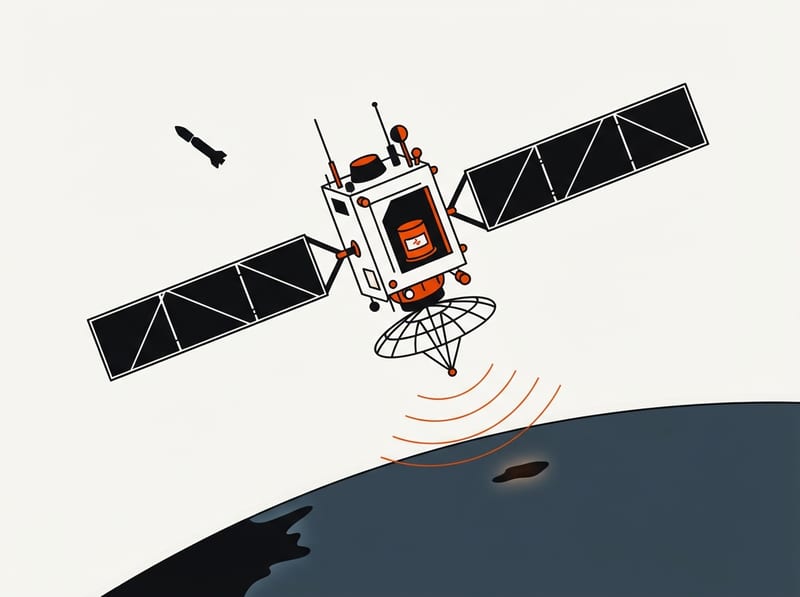
The Indian Space Research Organisation (ISRO) launched the GSLV-F18 rocket on October 30, 2026, placing the NVS-03 navigation satellite into a Geosynchronous Transfer Orbit, according to FoneArena. Liftoff came at 23:51 IST from the Second Launch Pad at the Satish Dhawan Space Centre in Sriharikota. NVS-03 is meant to strengthen NavIC, India's regional navigation system, as India Today described in its pre-launch coverage.
Key facts
- Launch: GSLV-F18 lifted off on October 30, 2026 at 23:51 IST, the 20th flight of the GSLV.
- Orbit: Elliptical transfer orbit with a perigee of 170.3 km and an apogee of 38,080 km, inclined at about 20.75°, close to target parameters.
- Satellite: NVS-03 uses ISRO's I-2K bus and has a lift-off mass of about 2,250 kg.
- Coverage: The whole Indian landmass plus a buffer of roughly 1,500 km beyond India's boundaries.
- Vehicle: A three-stage rocket about 50 meters tall with a gross lift-off mass of roughly 420 tonnes.
What the satellite adds
NVS-03 is the third spacecraft in India's second-generation NavIC series, which is designed to sustain and upgrade the Indian Regional Navigation Satellite System. According to FoneArena, it carries an indigenous rubidium atomic clock alongside procured space-grade atomic clocks, which supply the timing references behind position, navigation and timing data.
The notable signal change is the civilian L1 band at 1575.42 MHz, added to the legacy L5 and S-band signals. FoneArena reports that L1 improves interoperability with global systems such as GPS and Galileo and supports standard consumer positioning hardware.
Why it matters
India Today frames the satellite as a means of ensuring continuity of navigation services for users in India and beyond. A system that works with L1 receivers is more practical for mainstream devices than one limited to signals those devices rarely support. The sources do not say which device makers will adopt it.
The launch also carried political weight. Prime Minister Narendra Modi called it an important step in strengthening NavIC and advancing self-reliance in critical technologies. Science minister Dr Jitendra Singh also congratulated the ISRO team and cited the country's space reforms.
What to watch next
The satellite is not yet in its working position. FoneArena reports that its solar panels deployed shortly after separation and that telemetry links were established with ground stations. Orbit-raising maneuvers into its intended operational slot are scheduled, and the sources give no date for them.
After that, the open questions are when NVS-03 begins service and how quickly L1 support reaches consumer hardware. Neither source gives a timeline for either.